<!doctype html>
Why Your Rancho District Home Stays Too Warm | Green Planet Heating and Air
:root
--gp-border:#e0e5ea;
--gp-bg:#f8fafc;--gp-accent:#1b6f3a;
--gp-text:#1a1f27;--gp-muted:#526173;
Bodymargin:0;font-family:system-ui,-apple-system,Segoe UI,Roboto,Ubuntu,Cantarell,"Helvetica Neue",Arial,"Noto Sans",sans-serif;color:var(--gp-text);line-height:1.6;background:#fff;
.boxedMax-width:980px;margin:24px auto;padding:24px;border:1px solid var(--gp-border);
Border-radius:10px;background:var(--gp-bg);Box-shadow:0 1px 2px rgba(16,24,40,0.04);
H1,h2,h3margin:0 0 12px 0;line-height:1.25;
H1font-size:34px;H2font-size:22px;margin-top:28px;
H3font-size:18px;margin-top:20px;Pmargin:10px 0;
.notecolor:var(--gp-muted);.cta
Background:#fff;border:1px solid var(--gp-border);padding:18px;border-radius:10px;margin-top:26px;.cta strongcolor:var(--gp-accent);
.dividerheight:1px;background:var(--gp-border);margin:20px 0;
.tagdisplay:inline-block;padding:4px 8px;border:1px solid var(--gp-border);border-radius:20px;margin:6px 6px 0 0;background:#fff;color:#243144;font-size:13px;Acolor:#0d5e2e;text-decoration:none;
A:hovertext-decoration:underline;.griddisplay:grid;grid-template-columns:1fr;gap:14px;
@media(min-width:820px).gridgrid-template-columns:1fr 1fr;
Why Your Rancho District Home Stays Too Warm
Local HVAC insight for Burbank, CA homes, with a focus on the Rancho District microclimate and building stock.
Rancho District realities that push indoor temperatures up
The Rancho District sits flat and sunny near the Los Angeles River and the Equestrian Center. The area takes full sun from late morning through sunset. Summer highs in Burbank often land in the upper 90s to low 100s. Attic temperatures can reach 130 to 150 degrees in mid-afternoon. That heat soaks drywall and ducts. It keeps rooms warm long after the sun drops.
Many Rancho homes are single-story ranch styles built from the 1940s to the 1970s. Some have additions over time, enclosed patios, or converted garages. These changes often create airflow bottlenecks. Return air sizes stay small. Supply branches stretch too far. Ductwork meanders around beams and old chaseways. Static pressure rises and airflow falls. The result is weak cooling in back bedrooms and hot living rooms with big west-facing windows.
Local tree cover helps, but many lots have open yards to fit equestrian uses. That leaves roofs and south or west walls exposed. Afternoon solar gain spikes. Indoor loads jump from 3 to 5 pm. If the air conditioner is undersized, or if airflow is low, it cannot catch up. The home stays one to four degrees above the setpoint until late evening.
Common technical culprits in Burbank homes
Local service calls within 91505 and 91506 show a pattern. Weak cooling in the Rancho District is less about the thermostat and more about heat transfer and airflow. These are the defects that appear again and again.
Low airflow from high static pressure
Older return grilles measure 12x20 or 14x20. That is small for a 3-ton system. The blower struggles against high external static pressure. The air handler moves 250 to 300 CFM per ton instead of the target 350 to 400. Coil temperature drops too far and the evaporator starts to frost. Supply air chills but does not move enough volume to carry heat out of rooms. The thermostat reads 77 when set to 74 even with a long run time.
A field fix often includes a second return, a larger return drop, and a high-flow grille. Green Planet Heating and Air measures static with a manometer at the cabinet and across the filter. A reading above 0.8 in w.c. On most residential systems is a red flag. Corrective duct work plus a right-size MERV filter restores target CFM and cuts run time.
Leaky or undersized ducts in hot attics
Attic ducts in Burbank can lose 20 to 30 percent of flow if seams leak and insulation is thin. A single unsealed takeoff can blow 50 to 80 CFM into a 140-degree attic. The system then pulls more return air to make up the loss. Rooms near the air handler feel fine while end-of-line rooms run hot. A short visual check does not reveal it. Pressure testing and thermal imaging do.
Proper repair includes mastic sealing, R-8 insulation wraps, and rebalancing dampers. Flex runs that snake across trusses get straightened and shortened. In many Rancho homes, the simple act of replacing one 25-foot flex run with a 12-foot direct run cools a back bedroom by two degrees during peak heat.
Dirty condenser coils and blocked heat rejection
Valley dust and plant debris clog the condenser coil fins. Heat cannot reject into the outdoor air. Head pressure rises. The compressor draws more amps. Supply air warms. A garden rinse helps but does not reach between the fin layers. A proper coil wash uses a low-pressure applicator, a non-acid foamer, and a straight rinse from inside out after panel removal. Amp draw and head pressure drop. EER improves. On a 3-ton unit, it can shave five to ten minutes off each cycle during a 98-degree afternoon near the Equestrian Center.
Refrigerant undercharge and frozen evaporator coils
Tiny leaks at flare fittings or service valves are common in older systems. Low charge drops suction pressure. The evaporator runs below 32 degrees. Frost forms, then ice. Airflow falls and supply vents start blowing weak and cool, then warm. Homeowners spot wet filters or water under the air handler after a thaw. Green Planet technicians use electronic sniffers and nitrogen pressure tests to confirm. A weigh-in charge to factory spec, after leak repair, brings superheat and subcooling into the target band. That stabilizes coil temperature and restores capacity.
Capacitors and blower motors on the edge
Heat shortens capacitor life. A weak run capacitor reduces the compressor’s torque. The motor still starts, but performance sags and the unit short cycles. A failing ECM blower motor may still spin but at the wrong RPM range. The home feels stuffy and warm. Checking microfarads under load and confirming fan tables by static gives a quick answer. Replacing a weak 40/5 capacitor or setting the correct ECM profile fixes much of the comfort gap.
Why west-facing rooms in the Rancho District lag behind
West walls and glazing absorb heavy sun from 2 to 6 pm. Without low SHGC glass or exterior shading, solar heat gain can add 1 to 2 tons of load to one wing of a home. The central system sends equal airflow to all rooms. The cool air divides evenly, but the heat does not. The back bedroom or living room stays hot.
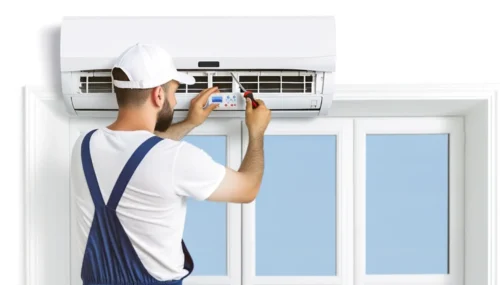
There are three practical routes. Increase capacity to that zone. Reduce the load at the windows and walls. Or add a second system that handles peak hours only. Green Planet Heating and Air often proposes a small Mitsubishi Electric or Daikin ductless mini-split for the hot side. A 9k to 12k BTU wall-mounted head takes the edge off and runs with variable speed. It sips power and cools fast when sun hits. That leaves the central system free to serve the rest of the home.
For homes that avoid mini-splits, a right-size return and a manual damper strategy can shift 10 to 15 percent more airflow to west rooms during summer. In the morning, set dampers back to balance the whole house. It is a practical solution in Magnolia Park bungalows and in Rancho ranch homes alike.
Attic insulation, ventilation, and duct placement
Many Burbank homes still carry R-19 to R-24 attic insulation. Current targets for the Valley fall near R-38 to R-49. Upgrading to blown-in cellulose or fiberglass batts lowers ceiling heat gain. Add baffles at eaves to keep airflow clear. Seal the top plates with foam where wiring penetrates. These small steps remove hot air infiltration that can feel like a draft.
Ducts that run across the attic gain heat quickly. Moving the air handler into a conditioned closet is a strong step but often not feasible in Rancho homes with low interior clearance. A practical middle ground is to bury ducts under new insulation blankets and insulate the attic hatch. A measured result is a one to two degree drop in afternoon room temps and shorter cycles during Burbank’s August highs.
Right-sizing equipment for Burbank’s microclimate
Contractors often install oversized systems to be “safe.” In the Valley, that causes short cycling. Humidity is not a huge issue in Burbank, yet coil dwell time still matters for sensible capacity. A variable-speed, high-SEER2 central air conditioner or heat pump holds a steady coil temperature at lower RPM. It runs longer but uses less energy per minute. The home feels more even, and noise falls.
Green Planet specifies systems from Carrier, Lennox, Trane, Goodman, Rheem, York, and Bryant. For premium variable-speed, Daikin and Mitsubishi Electric lead the pack with quiet outdoor units and smart inverter control. On small lots near the Rancho trail network, a quiet outdoor unit makes yard time better and keeps neighbors happy.
For many 1,500 to 1,800 square foot Rancho homes, the right capacity falls at 2.5 to 3 tons with duct corrections and window shading. Without those corrections, a 3.5-ton unit may still struggle during a 104-degree spike. The cost to run it rises and comfort never settles. A load calculation, a duct audit, and a SEER2-compliant variable-speed system deliver a better outcome.
Thermostats, sensors, and placement mistakes
Thermostats next to hall returns or in sunlit hallways misread the home. They call too little or too much. A smart thermostat with a remote sensor in the hottest bedroom balances calls. Modern platforms integrate with Energy Star rated HVAC equipment. Smart zoning is not always needed. A single remote sensor and a schedule that weights afternoon readings can even out a Rancho floor plan.
Green Planet integrates thermostats with central air handlers, ductless mini-splits, and hybrid heating systems. It ties in with indoor air quality accessories such as UV air purifiers and whole-house fans. IAQ testing reveals if filters clog fast or if biological growth sits on coils or in drain pans. These findings often align with homeowner reports of musty smells or irritated sinuses when the AC kicks on.
What a focused Burbank AC diagnostic includes
Service in Burbank must respect the heat, the dust, and the building styles near Warner Bros. Studios, Walt Disney Studios, and the Media District. A Green Planet diagnostic covers the parts that fail under Valley stress. The team checks the compressor amps, condenser coil condition, blower wheel cleanliness, and verifies expansion valve behavior with superheat and subcooling targets. Electrical tests catch faulty capacitors and weak contactors before they strand a system at 5 pm.
On airflow, the technician reads static pressure, measures delivered CFM at supply grilles, and inspects duct runs for kinks and long loops. On refrigerant leaks, the technician scans with a sniffer, then confirms with nitrogen and a bubble solution. On water issues, the technician flushes the condensate line and verifies the slope and clean trap. This process heads off short cycling, frozen evaporator coils, and high energy bills when a heat wave rolls in.
Neighborhood and landmark context strengthens the plan
Homes near the Los Angeles Equestrian Center and the Rancho trail network often have open yard exposure with strong sun. Homes near Stough Canyon Nature Center sit closer to hillside breezes but still heat up fast after noon. Properties around Woodbury University face sun on larger roof spans. Residences east of Hollywood Burbank Airport see dust and fine debris load coils more often. Downtown Burbank condos add different constraints with tight mechanical closets and shared ventilation systems.
These details shape the solution. The same 3-ton unit behaves differently in Magnolia Park than in the Burbank Hills. Local tune-ups adjust blower speeds, set fan-off delays, and balance airflow for that block’s sun and wind profile.
A Rancho case study: why a “working” AC left rooms at 78
A single-story, 1,650 square foot ranch on a quiet street south of Riverside Drive kept drifting to 78 in late afternoons. The thermostat was set to 74. The system was a 3-ton, 14 SEER unit feeding old ductwork with a 14x20 return. The homeowner had replaced filters on time. Vents blew cool air but not much of it.
Testing showed static at 1.0 in w.c. On high cool. Delivered airflow approximated 280 CFM per ton. The condenser coil was matted with dust and jacaranda fluff. Superheat was high, subcooling low. A weak 45/5 capacitor dragged the compressor. Supply grilles read 53 degrees, but living room temperature would not drop.
The fix list was short and direct. Install a second 16x25 return with a larger drop. Clean the blower wheel and the evaporator. Wash and straighten condenser fins. Replace the capacitor. Add mastic to four leaking takeoffs. Move one 25-foot flex run to a 12-foot straight shot. Result at 4 pm on a 99-degree day: static 0.55 in w.c., around 360 CFM per ton, head pressure dropped, measured EER up. The home held 74 by 3:30 pm with normal cycling. Energy use during peak dropped by roughly 15 percent across the next billing period.
Why Green Planet ties comfort to safety in mixed-fuel homes
Burbank homes often mix gas heating with electric air conditioning. A cracked heat exchanger does not make the home warm, but it does make it unsafe. Heat season is short in the Valley, so furnaces can miss attention. Green Planet includes a heat exchanger inspection during a tune-up. If a crack appears, the furnace stays off until repaired or replaced. This protects air quality and maintains code compliance with Los Angeles County standards.
Hybrid heating systems, which pair heat pumps with gas furnaces, make sense in milder Burbank winters. Variable speed heat pumps carry most heating hours with lower cost per BTU. The gas furnace steps in on cold mornings. Proper thermostat integration prevents short cycling and holds a steady indoor temperature without noise or draft.
Equipment brands, parts, and what matters in the Valley
Green Planet services Lennox, Carrier, Trane, Goodman, Rheem, York, Bryant, and American Standard equipment. For premium installs, Daikin and Mitsubishi Electric lead with quiet inverter compressors and thoughtful controls. The brand badge matters, but the duct design, refrigerant charge, and setup matter more. Correct airflow across the evaporator coil protects the compressor, maintains SEER2 performance, and keeps bills lower when the Media District heats up.
Key components carry most failures under heat. The compressor, condenser coil, blower motor, expansion valve, air handler, and capacitors face the brunt. The team stocks common parts on the truck. That keeps most Rancho repairs same-day. On indoor air quality, UV air purifiers and higher MERV filters help, but filter choice must fit the duct. A MERV 13 in a small return can choke airflow. A two-inch media filter with more surface area hits a better balance.
Where precision meets local service in Burbank
Location awareness matters for response and for design. Green Planet reaches homes across 91501, 91502, 91504, 91505, 91506, and the 91521 studio zone fast due to proximity to Hollywood Burbank Airport. The team knows the quirks of the Media District, Toluca Lake on the Burbank side, Magnolia Park, the Burbank Hills, and Downtown Burbank. The crew also serves Glendale, North Hollywood, Sun Valley, Pasadena, and Toluca Lake. That regional context helps when systems span property lines or when a unit sits near shared walls or alleys.
For homeowners searching for air conditioning service Burbank or HVAC Burbank during a heat spike, the company offers 24/7 emergency AC service. Calls that mention weak cooling, short cycling, unusual HVAC noises, or warm air at vents route to a dispatcher who knows local streets and studio schedules. That keeps access clear near Warner Bros. Studios, Walt Disney Studios, and Nickelodeon Animation Studio during production windows.
Maintenance that fits San Fernando Valley heat
Preventive maintenance holds the line when sun bakes roofs in July and August. Green Planet’s Burbank Seasonal Tune-Up Special centers on three goals. Keep airflow in range. Keep refrigerant charge in spec. Keep heat rejection clear. The technician checks static, cleans the condenser coil, washes the outdoor unit base, and cleans or replaces filters. The team flushes the drain and verifies the float switch. Electrical tests catch weak capacitors and loose lugs. Small actions prevent a 5 pm breakdown when the Valley sits at 100 degrees and the home faces west.
NATE-certified technicians handle these checks with EPA 608 compliant refrigerant practices. That protects equipment and aligns with local code. Licensed and insured under CSLB, the company stands behind repairs and installations. As an Energy Star Partner, the team aligns product choices with utility rebate paths for Burbank Water and Power programs when available. Homeowners see clear line items and straight pricing. No surprises.
How to tell if your Rancho system needs a pro this week
The signs are simple and repeatable. They match Burbank conditions and building styles. A brief self-check saves time before calling for service.
- Vent air feels cool but weak in back bedrooms by 3 pm, with the thermostat stuck three degrees high.
- Ice shows on the indoor coil or refrigerant lines, or water drips from the air handler pan after a thaw.
- Outdoor unit runs loud and hot to the touch, and cycles on and off more often than usual.
- Musty odors hit when the system starts, especially after a few idle days.
- Summer bills jump higher than prior years with no change in thermostat settings.
If any item matches what the home shows, schedule a diagnostic. Early fixes protect the compressor and avoid larger costs as the heat wave continues.
Installation choices that actually cool Burbank rooms
A high-efficiency label on the box does not guarantee comfort in the Rancho District. The install does. Green Planet focuses on duct design first. The team sizes returns to the blower, not to cabinet openings. It routes supply runs direct and short. It seals and insulates ducts, then measures airflow. The system receives a proper refrigerant weigh-in, then a fine tune by superheat and subcooling. The thermostat uses a remote sensor in the hottest room. These steps deliver even temperatures from the Burbank Hills to Magnolia Park.
For add-ons and garage conversions near the Equestrian Center, a ductless mini-split wins on speed and cost. A single 12k BTU head cools a 300 to 450 square foot room well, even during a 103-degree peak. It pairs with a UV air purifier if indoor air quality is a concern. In mixed-fuel homes, hybrid systems reduce gas use while keeping strong heat on cold mornings. Whole-house fans help purge attic heat at dusk, but they need sealed ducts and tight fire-blocks to avoid pulling dusty attic air into the home.
Studio-adjacent living and noise control
Blocks near the studios sit under watchful production schedules. Homeowners want quiet systems that do not rattle during late sound work. Variable-speed condensers from Daikin, Mitsubishi Electric, Carrier, and Lennox drop outdoor sound levels. Proper pad placement, line-set isolation, and rubber bushings quiet the rest. Indoors, a clean blower wheel and correct fan speeds remove whine. The difference shows during a quiet night in Toluca Lake or a lazy afternoon near the Rancho trails.
IAQ testing and filtration for Valley dust
Indoor air quality matters in dry, dusty summers. Green Planet performs IAQ testing to spot high particulate counts or volatile compounds that can rise in airtight remodels. UV air purifiers scrub coil surfaces. Filter upgrades help, but MERV filters must match return size and blower strength. Many Rancho returns handle a two-inch MERV 11 media filter well but struggle with a one-inch MERV 13. The goal is clean air without choking airflow and raising static pressure.
How Green Planet Heating and Air supports Burbank homeowners
The company builds solutions around Burbank homes and microclimates. The team installs and services central air conditioners, heat pumps, furnaces, and ductless mini-split systems. The scope includes air conditioning repair, HVAC installation, furnace maintenance, heat pump services, thermostat integration, and indoor air quality testing. The approach is technical and local, tuned to the Rancho District, Magnolia Park, the Burbank Hills, the Media District, Toluca Lake, and Downtown Burbank.
Technicians are NATE-certified. Refrigerant work follows EPA 608 rules. The company is licensed and insured under CSLB. As an Energy Star Partner, product choices and set-ups align with efficiency targets and SEER2 ratings. Brand coverage spans Carrier, Lennox, Trane, Goodman, Rheem, York, American Standard, Daikin, Mitsubishi Electric, and Bryant. That depth maintains factory warranties and gives homeowners real options.
Signals that help your home show up strong on maps
Service availability in Burbank is year-round with 24/7 emergency AC service in peak months. Response is fast across 91501, 91502, 91504, 91505, 91506, and 91521 due to central dispatch near Hollywood Burbank Airport. Crews know access points around Warner Bros. Studios, Walt Disney Studios, and Nickelodeon Animation Studio. That local logistics reduces time to arrival and keeps repair windows tight.
Homeowners who note their neighborhood and zip code during the request help route trucks faster. Mention Rancho District, Magnolia Park, Media District, Burbank Hills, Toluca Lake on the Burbank side, or Downtown Burbank. If parking is tight or if gates need codes, the dispatcher adds the notes to the work order. Small details speed up service and improve outcomes when heat pressure is high.
Burbank Seasonal Tune-Up Special and fast AC repair
Green Planet Heating and Air offers a local tune-up built for San Fernando Valley heat. The service includes coil cleaning, static pressure testing, filter service, drain line flush, and a full electrical check. It aligns with SEER2 performance and factory specs. It is handled by NATE-certified technicians and follows EPA 608 refrigerant rules.
Ready to stop the late-day heat creep in your Rancho District home?
- Request a diagnostic for air conditioning service Burbank with same-day options where schedule allows.
- Ask about duct sealing and return upgrades if back rooms run warm.
- Mention “Burbank Seasonal Tune-Up Special” to prep before the next heat wave.
Green Planet Heating and Air serves all of Burbank, CA, and nearby Glendale, North Hollywood, Sun Valley, Pasadena, and Toluca Lake. Service is licensed and insured, with transparent pricing. Calls for HVAC Burbank during peak hours route to local dispatch for faster arrival windows.
Book online or call to schedule. Prefer texting? The team can confirm windows and arrival ETAs by message. 24/7 emergency AC service is available for no-cool events and refrigerant leaks.
Green Planet Heating and Air
| Monday | Open 24 hours |
| Tuesday | Open 24 hours |
| Wednesday | Open 24 hours |
| Thursday | Open 24 hours |
| Friday | Open 24 hours |
| Saturday | Closed |
| Sunday | Open 24 hours |